
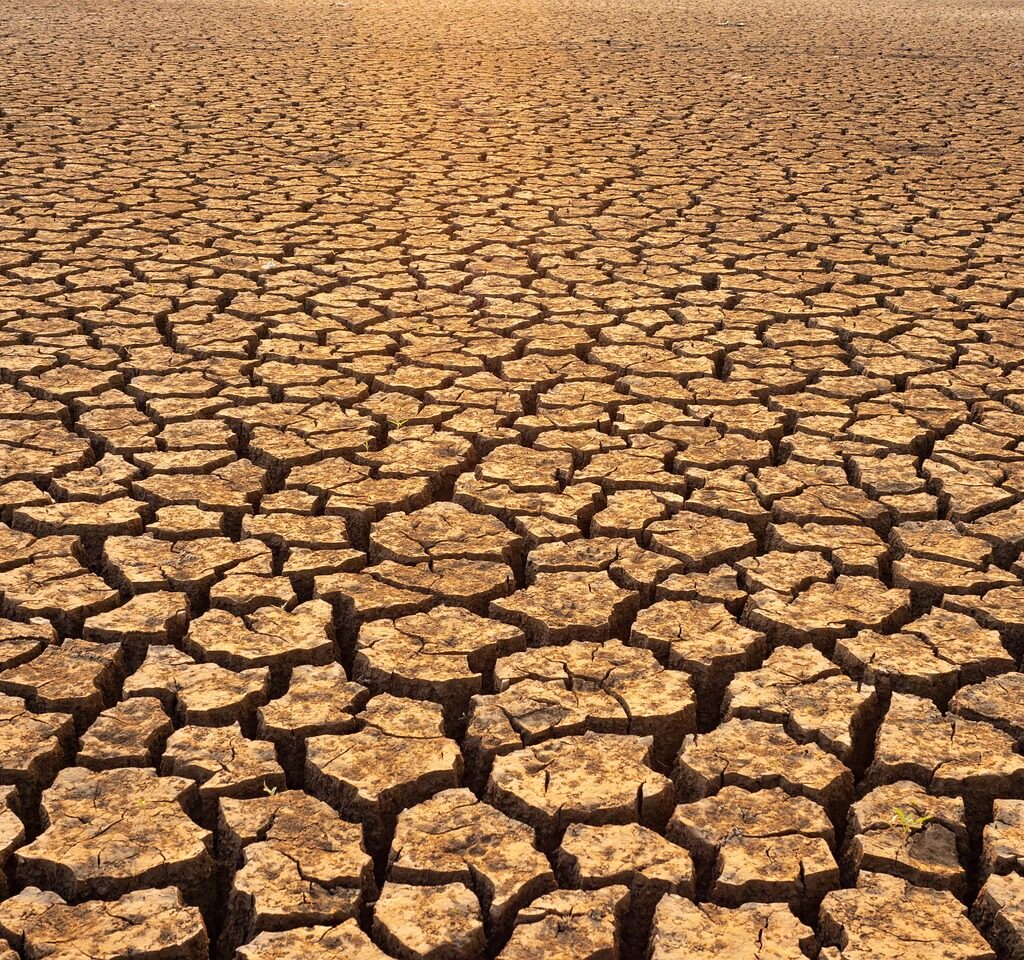
Satellite analysis from CSIS indicates that Tehran’s already severe water shortages are worsening at an accelerated pace. President Masoud Pezeshkian issued one of the strongest warnings yet, stating that if meaningful rainfall does not arrive within the next month, Tehran will have to impose water rationing—and, in the most extreme scenario, consider evacuating parts of the city. Although specialists view a full-scale evacuation of the capital’s 10 million residents as unlikely, the president’s remarks underscore the scale of the challenge confronting a nation of more than 90 million people, whose struggling economy remains heavily burdened by sanctions.
Iran is currently enduring its sixth consecutive year of drought, compounded by heatwaves that pushed summer temperatures beyond 50 degrees Celsius (122°F). According to the Meteorological Organization, the previous water year, which ended in late September 2025, was among the driest ever recorded. The early months of the current water year suggest an even more alarming trend, with only 2.3 mm of precipitation by early November—an 81 percent drop compared with long-term averages. Water levels across the country reflect this stress: 19 major dams, up from nine just weeks earlier, are now below 5 percent capacity, while many others sit at precariously low levels.
Tehran’s water crisis is rapidly worsening…details from @CSIS https://t.co/YODn8I2vjI
President Masoud Pezeshkian said that evacuations of parts of Tehran could be necessary if Tehran does not receive rainfall soon. More dramatically, he warned that Iran now has “no choice”…
— John Spencer (@SpencerGuard) November 30, 2025
The gravity of the crisis is sharpening debate over how Iran can respond. Measures that would significantly reduce water consumption pose political and economic risks. Scaling back water-intensive agriculture and industry would be deeply disruptive, and efforts to rein in excessive usage by influential actors—such as the Islamic Revolutionary Guard Corps’ Khatam al-Anbiya Construction Headquarters—could jeopardize important revenue streams for the security apparatus. Meanwhile, the constitutional commitment to food self-sufficiency encourages agricultural practices that draw heavily on dwindling water reserves. Even price reforms meant to curb consumption, such as raising water and electricity tariffs, carry the potential to spark public unrest.
With reservoirs drying, groundwater severely depleted, and climate pressures mounting, Iran’s policymakers face difficult decisions. The question now confronting the government is whether it can undertake the politically sensitive reforms required to keep Tehran—and much of the country—livable in the years ahead.
Iran's critical water shortage, exacerbated by decades of mismanagement and drought, threatens to make Tehran uninhabitable https://t.co/4fefXde4Gr pic.twitter.com/C3qwdgo3uh
— Reuters (@Reuters) November 12, 2025