Online magazine highlighting research, news and analysis covering the European Neighbourhood

EU

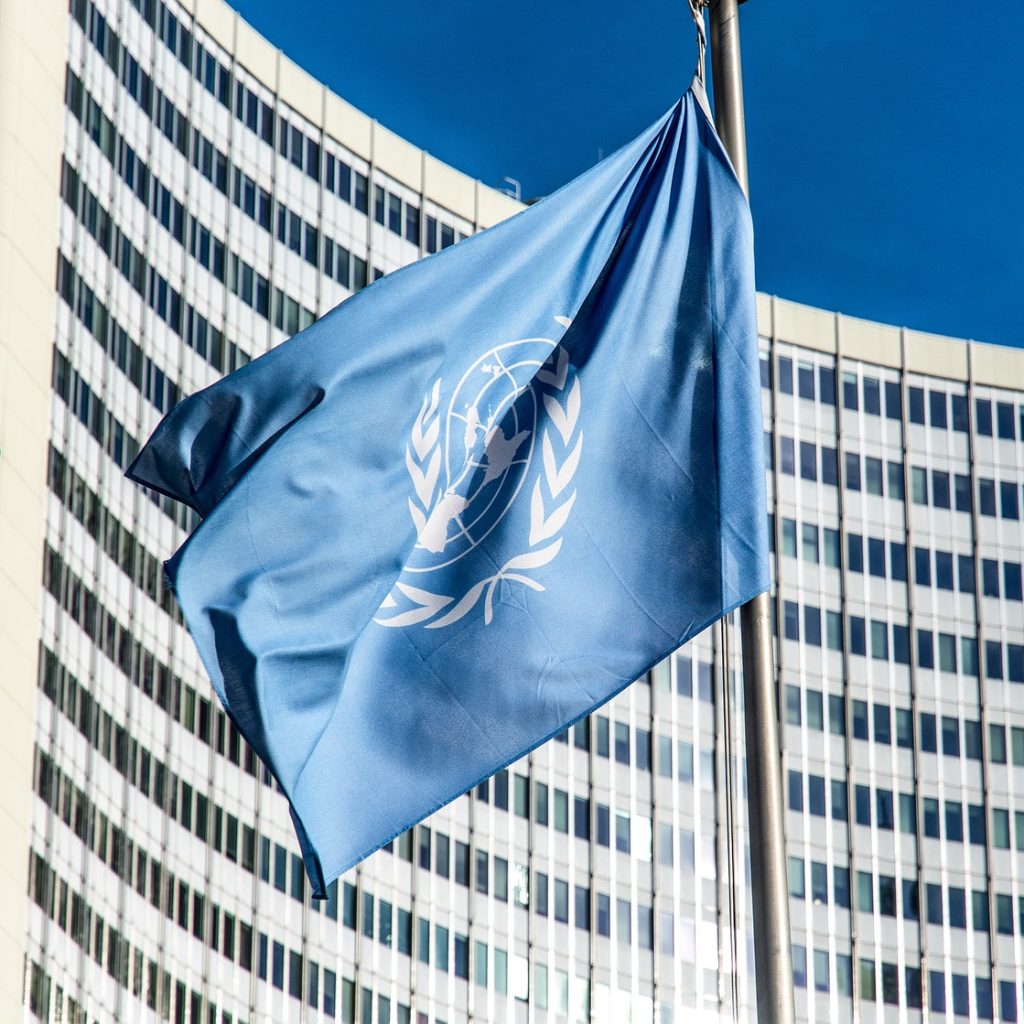
UN official slams EU for using green policies to hold back developing countries

”Rebeca Grynspan, secretary-general of United Nations Conference on Trade and Development, has issued fundamental criticism at the EU’s trade policies, stating they hurt developing countries. She told the Financial Times: “Many trade rules forbid policies that can be used by developing countries. And the developed countries have more fiscal space to subsidise in the areas […]

UN official slams EU for using green policies to hold back developing countries Read More »

EU agency warning EU may miss its own climate targets triggers debate about policy alternatives

In a new report, the EU’s European Environment Agency (EEA) warns the EU that it is failing its climate targets, noting that the current 10-year trend is “going in the wrong direction”. The EEA takes stock annually of progress towards the 8th Environment Action Programme (8th EAP) objectives on the basis of a set of

EU agency warning EU may miss its own climate targets triggers debate about policy alternatives Read More »

“China’s policy to increase export controls on rare earth metals further politicises global energy trade”

Francesco Sassi, a researcher in energy geopolitics and markets at Ricerche Industriali ed Energetiche (RIE) in Bologna, takes a closer look at China’s policy to increase export controls on rare earth metals, oxide products, and crude oil imports. He writes: “The move will further politicise global energy trade and make harder for the collective West,

“China’s policy to increase export controls on rare earth metals further politicises global energy trade” Read More »

A closer look at CBAM, the EU’s new external carbon tariff

Following the agreement on the EU’s new external carbon tariff CBAM, Ron Stoop, a Dutch political economist, takes a closer look at this new “Carbon Border Adjustment Mechanism”. He writes: “The Carbon Border Adjustment Mechanism (CBAM) is a new EU law that attempts to protect low-carbon production in Europe against ‘dirty imports’, which are often

A closer look at CBAM, the EU’s new external carbon tariff Read More »

South East Asian NGOs warn about the development implications of EU policy

Kaoem Telapak, an Indonesian NGO has warned that the EU’s recently adopted restrictions on the import of commodities linked to deforestation, such as palm oil from Indonesia, have a noble intention but could have unintended impacts. Writing in newspaper Mongobay, a spokesperson for the NGO notes that “one of the biggest importers of Indonesian palm

South East Asian NGOs warn about the development implications of EU policy Read More »

“Connecting railway infrastructure between Ukraine and the EU provides great trade opportunities”

Since Russia’s invasion of Ukraine, the country’s land transport connections with the EU have become key for Ukrainian imports and exports. Therefore, EU-Ukraine Solidarity Lanes have been created to strengthen the cross-border connections. The Connecting Europe Facility II has recently selected nine projects for funding that will aim at improving crossing points. The Commission has furthermore

“Connecting railway infrastructure between Ukraine and the EU provides great trade opportunities” Read More »

“Coup in Niger is the consequence of Western neglect of Africa”

Writing for Euractiv, Francesco Sassi, a research fellow in energy geopolitics and markets at Ricerche Industriali ed Energetiche (RIE) in Bologna, comments on the events in Niger and the implications for Europe. “Rome is seeking US and EU support for its “new” and “peer-to-peer” approach towards continental instability – a plan dubbed the “Mattei Plan”,

“Coup in Niger is the consequence of Western neglect of Africa” Read More »

“Cost of EU CBAM climate tariff for Africa is four times higher than EU developmend aid”

Experts have warned that EU’s carbon border scheme is punitive, and dramatically reduces the space for developing countries to achieve growth and to create jobs. The so-called CBAM enters into force on a transitional basis in October and it introduces a carbon tax on exports to the EU.  A study carried out by the African

“Cost of EU CBAM climate tariff for Africa is four times higher than EU developmend aid” Read More »