
Italy has strengthened its energy relationship with Azerbaijan in recent years, with natural gas imports and downstream investments forming a central part of this cooperation. The partnership has gained attention in the context of broader efforts to diversify European energy supplies and reduce dependence on traditional routes.
Growing gas supplies to Italy
In 2025, Azerbaijan exported approximately 25 billion cubic meters (bcm) of natural gas, of which around 7.5 bcm was delivered to Italy. This makes Italy the largest European importer of Azerbaijani gas. Supplies arrive primarily through the Trans Adriatic Pipeline (TAP), which is part of the broader Southern Gas Corridor connecting the Caspian region to Europe.
Since becoming operational, TAP has delivered a cumulative volume of roughly 47.5 bcm of gas to Europe. Currently, it covers about 16% of Italy’s total gas demand. Annual flows stand at around 9.5 bcm, with recent infrastructure upgrades—such as additional compressor capacity—allowing incremental increases. With further expansion, the pipeline’s capacity could approach 20 bcm per year.
During a recent meeting between Italian Prime Minister Giorgia Meloni and Azerbaijani President Ilham Aliyev, both sides emphasized the importance of continuing to expand gas volumes via TAP. The discussions were framed around maintaining reliable energy partnerships amid global supply uncertainties.
🇮🇹🇦🇿 Azerbaijan supplies 16% of Italy's gas.
SOCAR just bought 4,500 Italian fuel stations.
This is what energy security looks like when Hormuz closes.
While the world watches the Strait Italy just rewired its energy architecture northward.
The Meloni-Aliyev meeting, what… pic.twitter.com/UXI8C0GFvE
— Jack Prandelli (@jackprandelli) May 5, 2026
Strategic infrastructure and supply routes
The Southern Gas Corridor spans multiple countries, linking gas fields in Azerbaijan through Georgia and Turkey, then onward via Greece and Albania before reaching southern Italy. This route offers an alternative to maritime energy transport routes, which can be vulnerable to geopolitical disruptions.
By increasing volumes through TAP, Italy and its partners aim to secure additional overland supply capacity that complements existing energy imports.
Azerbaijan is a valued and reliable energy partner for the EU, so it was good to be in Baku today for talks with @presidentaz Ilham Aliyev and Foreign Minister @Bayramov_Jeyhun.
Strengthening connectivity between the EU and the South Caucasus is in our shared strategic interest… pic.twitter.com/MulBMk1MfI
— Kaja Kallas (@kajakallas) May 5, 2026
SOCAR’s investment in Italy’s downstream sector
Beyond gas supply, Azerbaijan has expanded its presence in Italy’s downstream energy sector through its state oil company, SOCAR. In early 2026, SOCAR received European Commission approval to acquire a 99.82% stake in Italiana Petroli.
The acquisition includes:
Refining capacity of about 10 million tonnes per year across two Italian refineries
A nationwide network of approximately 4,500 fuel stations
Additional assets such as aviation fuel operations, bitumen production, and logistics infrastructure
This move gives SOCAR a vertically integrated position within one of the European Union’s largest energy markets, linking upstream gas production with downstream refining and distribution.
Dal gennaio 2026 l’Italia ha iniziato a convogliare il gas azero verso Austria e Germania, passando da semplice consumatore a intermediario strategico per l’intera Europa centralehttps://t.co/Ow53UhRxJf#gas #Italia #Azerbaigian
— Energia Oltre (@EnergiaOltre) May 5, 2026
Trade and broader context
Bilateral trade between Italy and Azerbaijan reached around €10.2 billion in 2025, making Italy Azerbaijan’s largest trading partner. Azerbaijani investments in Italy are estimated at approximately €2.5 billion.
The deepening relationship reflects wider changes in Europe’s energy landscape. As the European Union seeks to diversify away from Russian gas and manage potential disruptions in global supply routes, the Caspian corridor via Azerbaijan has emerged as an increasingly important component of the continent’s energy mix.
Overall, the Italy–Azerbaijan partnership illustrates how infrastructure development, long-term supply agreements, and cross-border investments are reshaping energy connections across Europe.
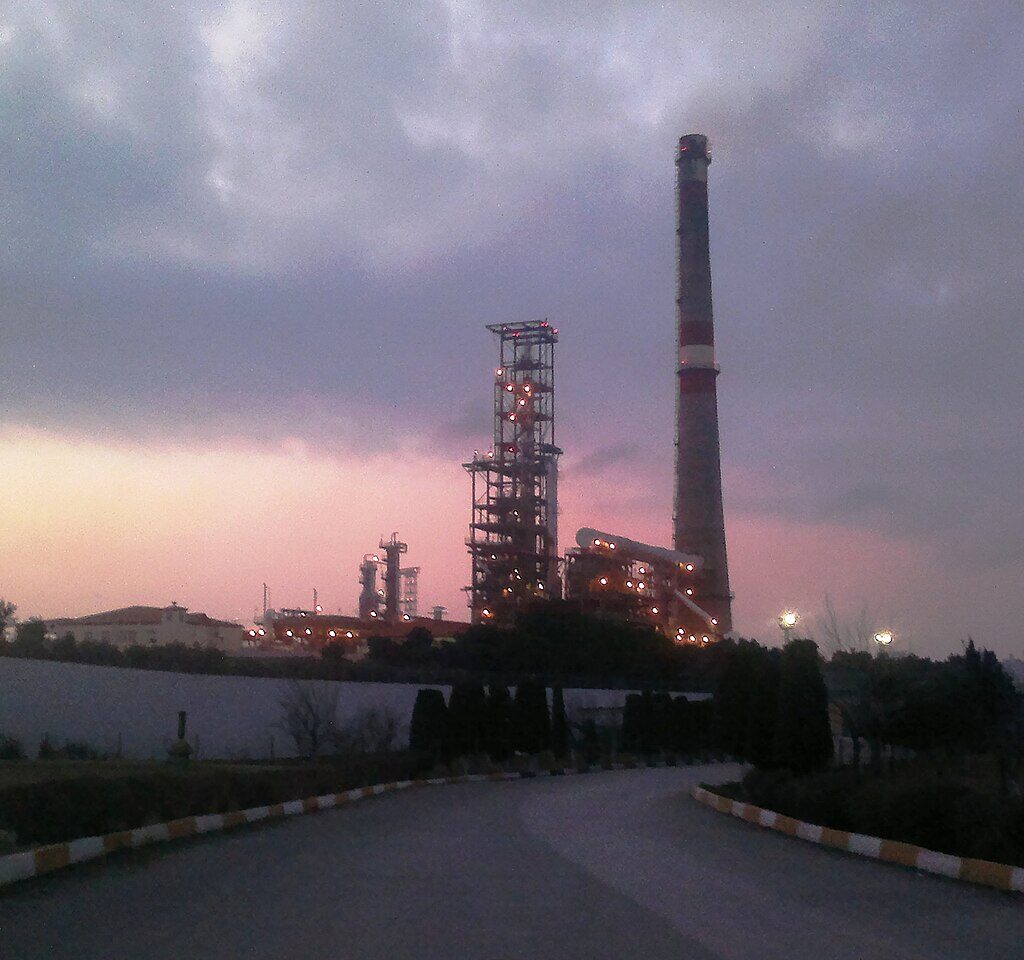
Copyright Picture: Interfase, CC BY-SA 4.0 <https://creativecommons.org/licenses/by-sa/4.0>, via Wikimedia Commons