
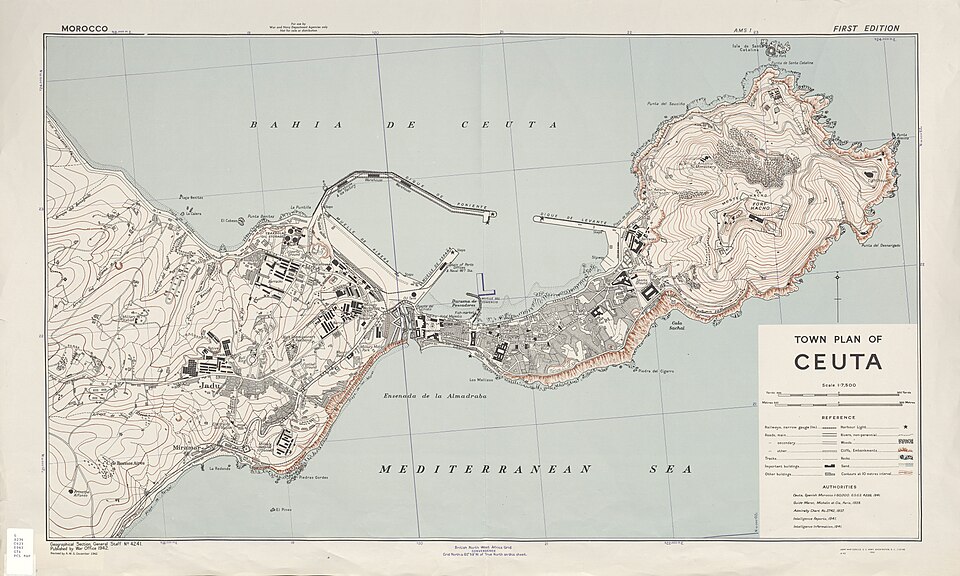
European interior and migration ministers have expressed strong support for Spain following an emergency meeting on the recent migration crisis in Ceuta, the Spanish enclave on the northern coast of Africa. The discussions focused on the large-scale arrival of migrants, the humanitarian consequences of the incident, and the European Union’s broader approach to managing migration and protecting its external borders.
The meeting concluded with a joint statement emphasizing solidarity with Spain and recognition of the country’s handling of the crisis. Ministers praised the Spanish authorities for their rapid response to the sudden increase in arrivals and offered condolences to the families of those who lost their lives while attempting the crossing. Although the meeting did not result in new policy decisions, participants described it as an opportunity to coordinate positions and prepare for more detailed discussions expected later this year.
Thousands Arrived in Two Days
According to Spanish authorities, approximately 72,000 migrants reached Ceuta over the course of Thursday and Friday last week in one of the largest sudden migration movements the enclave has experienced. Officials told their European counterparts that around 70,000 people have since returned to Morocco.
Spanish authorities also stated that there is currently no evidence suggesting that migrants who entered Ceuta have continued onward into mainland Europe. Ceuta, together with Melilla, occupies a unique position as a Spanish territory located on the African continent. While it forms part of Spain, it has a special legal status within the Schengen framework, meaning entry into the enclave does not automatically provide unrestricted access to the rest of the Schengen area.
Spain says it has returned "almost everyone" after the mass migrant crossing into Ceuta, but on the ground the reality appears far more complicated.
Thousands of migrants remain stranded across beaches, industrial estates and overcrowded reception centres.
Read our exclusive… pic.twitter.com/NdAgnylCdR
— The Telegraph (@Telegraph) August 4, 2026
Death Toll Continues to Rise
The humanitarian impact of the crisis has continued to grow as more victims have been identified.
Spanish authorities reported that 75 migrants have now been confirmed dead on Spanish territory after attempting to reach Ceuta. Moroccan authorities separately reported 11 fatalities on their side of the border, bringing the total confirmed death toll to 86.
Most of those who died are believed to have lost their lives while attempting to reach the enclave by sea. The incident has once again highlighted the dangers faced by migrants attempting irregular crossings into Europe, particularly along routes that involve dangerous maritime journeys.
European ministers expressed their sympathy for the victims during the meeting and acknowledged the significant human cost of the events.
Focus on European Cooperation
Despite differing national perspectives on migration policy, ministers described the discussions as constructive and emphasized the importance of a coordinated European response.
The joint statement stressed that protecting the European Union’s external borders is a shared responsibility requiring cooperation among all member states. Participants agreed that migration challenges cannot be addressed effectively by individual countries acting alone and instead require a common European strategy.
Several priorities emerged from the discussions. Ministers highlighted the need to strengthen the EU’s external border management, improve cooperation with countries outside the European Union, reinforce return policies for people without the legal right to remain in the bloc, and intensify efforts against criminal networks involved in migrant smuggling and human trafficking.
Spain: Schengen Was Never at Risk
Spanish Interior Minister Fernando Grande-Marlaska described the meeting as constructive and sought to reassure European partners that the recent events had not endangered the functioning of the Schengen area.
He stated that the Schengen system had “never been compromised” during the crisis, arguing that the legal status of Ceuta prevented the situation from threatening the passport-free travel zone. Because of the enclave’s special arrangements, migrants arriving there cannot automatically travel onward into the rest of the Schengen area.
His remarks were intended to address concerns raised in the immediate aftermath of the arrivals, when questions emerged about whether the sudden influx could affect border-free movement within Europe.
Broad Support from Member States
Irish Migration Minister Jim O’Callaghan, who chaired the ministerial meeting, said that every participating member state had expressed solidarity with Spain.
Denmark also welcomed Spain’s handling of the situation. Danish Migration Minister Morten Bødskov described the Spanish response as effective while arguing that the events underscored the importance of maintaining strong control over the European Union’s external borders.
Belgian Asylum and Migration Minister Anneleen Van Bossuyt similarly described the discussions as highly constructive. She said ministers broadly agreed on the need for greater unity within the European Union in responding to migration challenges.
According to Van Bossuyt, no country called for the suspension of the Schengen agreement during the meeting. This marked a notable shift from the immediate reaction to the crisis, when some European governments had voiced criticism of Spain’s handling of the situation.
She said there was broad agreement that irregular migration should be reduced, that migrant smuggling networks should be dismantled, and that crossing the EU’s external borders illegally should not automatically lead to residence rights within the Union.
Looking Ahead
While ministers agreed on the general direction of European migration policy, they acknowledged that the meeting was primarily intended as an exchange of views rather than a decision-making session.
Concrete proposals are expected to be discussed at the next European Council meeting in October, where leaders are likely to examine measures aimed at strengthening the EU’s external borders, improving cooperation with third countries, and developing a more coordinated approach to migration management.
The events in Ceuta are expected to remain a key topic in those discussions, reflecting both the humanitarian challenges posed by irregular migration and the political debate over how the European Union should respond to sudden migration pressures at its external frontiers.
Copyright picture: U.S. Army Map Service, Public domain, via Wikimedia Commons