
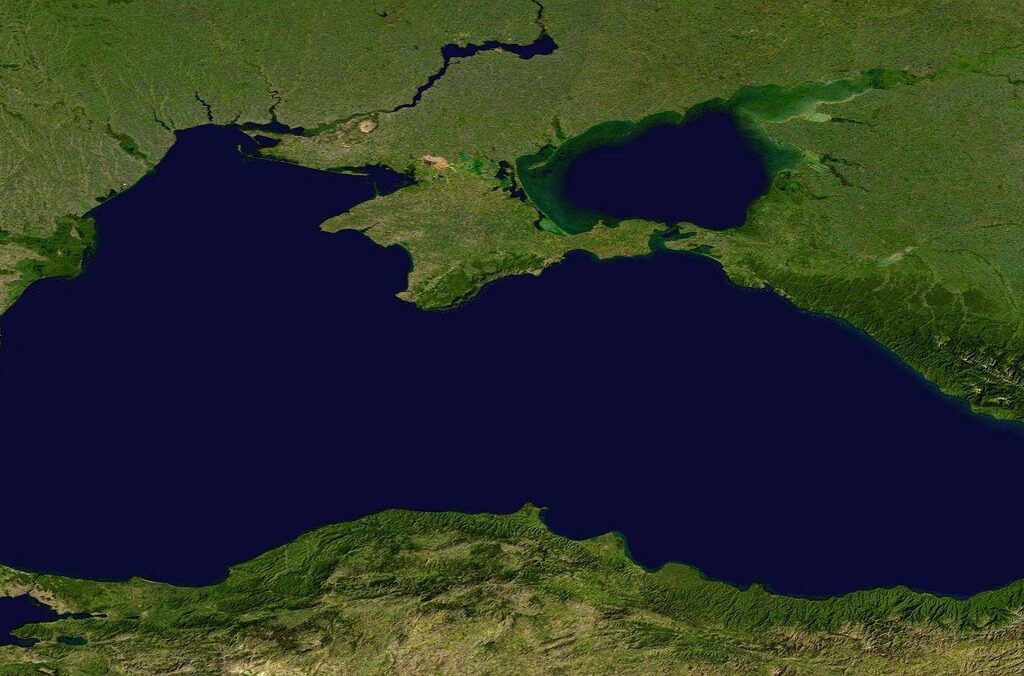
As diplomatic efforts continue to address the war in Ukraine, developments beyond the battlefield are reshaping the strategic environment of the wider Black Sea region. One of the less visible but increasingly significant dimensions of the conflict concerns energy security and the way energy infrastructure has become entangled in the hostilities.
Since the beginning of the war, energy assets and transport routes have been exposed to growing risks, reflecting the broader instrumentalisation of energy in the conflict. These dynamics are not confined to Russia and Ukraine alone but affect neighbouring states whose economic and security interests are closely tied to Black Sea energy flows.
Maritime Incidents and Oil Transport Disruptions
Over recent months, Ukrainian forces have carried out a series of attacks targeting maritime and offshore energy-related infrastructure in the Black Sea. These operations have had implications that extend well beyond the immediate military objectives.
Several oil tankers operating near the Turkish Straits were struck by unmanned surface vehicles. Among them were the Kairos and Virat, followed shortly by the Midvolga-2, which was transporting sunflower oil to Georgia. The Kairos was later towed away from the Turkish port of Ahtopol by a Turkish vessel and subsequently abandoned close to the Bulgarian coast, where it remains without propulsion or power.
In addition to shipping incidents, Ukrainian naval drones damaged the single point mooring (SPM) system of the Caspian Pipeline Consortium (CPC). The CPC terminal, located near the Russian port of Novorossiysk, is a critical export hub for oil produced primarily in Kazakhstan’s major fields — Tengiz, Kashagan, and Karachaganak — which together account for roughly 85% of the volumes transported through the system. The remaining share originates from Russian production in the North Caucasus. CPC operators described the incident as a serious security breach, underlining the vulnerability of shared infrastructure in conflict-adjacent zones.
Gas Transit and Strategic Continuity
Despite heightened tensions, Russia and Turkey have maintained cooperation in the natural gas sector. Gazprom and Turkey’s state-owned pipeline operator BOTAŞ agreed to extend for one year an existing supply contract covering deliveries via the Blue Stream and TurkStream pipelines. The renewed agreement involves volumes of approximately 21.75 billion cubic metres and was concluded shortly before the previous contract’s expiration at the end of December.
These two pipelines remain the most strategically important gas links across the Black Sea, anchoring the energy relationship between Russia and Turkey and shaping regional gas transit patterns.
🚨The Black Sea is now a high-stakes arena in the #EnergyWar.
🇺🇦Ukrainian attacks on🇷🇺🇰🇿Russian/Kazakh oil routes are forcing a major regional security reset, urging littoral states like🇹🇷Turkey to urgently seek diversification.Read the full analysis:https://t.co/YRb3edi1zy
— Francesco Sassi (@Frank_Stones) December 10, 2025
Regional Dimensions of Energy Security
The energy consequences of the war have been most visible in Europe, where higher gas and electricity prices continue to affect competitiveness and economic recovery. Although prices have declined from their peak levels, natural gas prices remain above long-term historical averages, while electricity markets continue to show significant national and regional disparities.
Beyond Europe, however, less attention has been paid to how the conflict is influencing energy security dynamics in regions bordering both Russia and Ukraine. The Black Sea basin, in particular, illustrates how energy geopolitics increasingly operates at a regional level, where the security concerns of individual states are closely interconnected.
In this context, energy security cannot be examined solely through global supply-demand balances or national policies. Instead, it reflects regional security complexes in which the actions of one actor — whether military, economic, or infrastructural — have immediate and often unavoidable consequences for others. For littoral states such as Turkey, these developments reinforce the importance of diversification strategies and external partnerships as a means of managing exposure to geopolitical risk.
Conclusion
The Russia–Ukraine war has added a new layer of complexity to the Black Sea’s energy landscape. Attacks on oil transport routes, vulnerabilities in shared infrastructure, and the continued strategic relevance of gas pipelines illustrate how energy and security have become increasingly intertwined. As the conflict persists, regional actors are likely to reassess their energy dependencies and security arrangements, with implications that will extend well beyond the immediate theatre of war.