
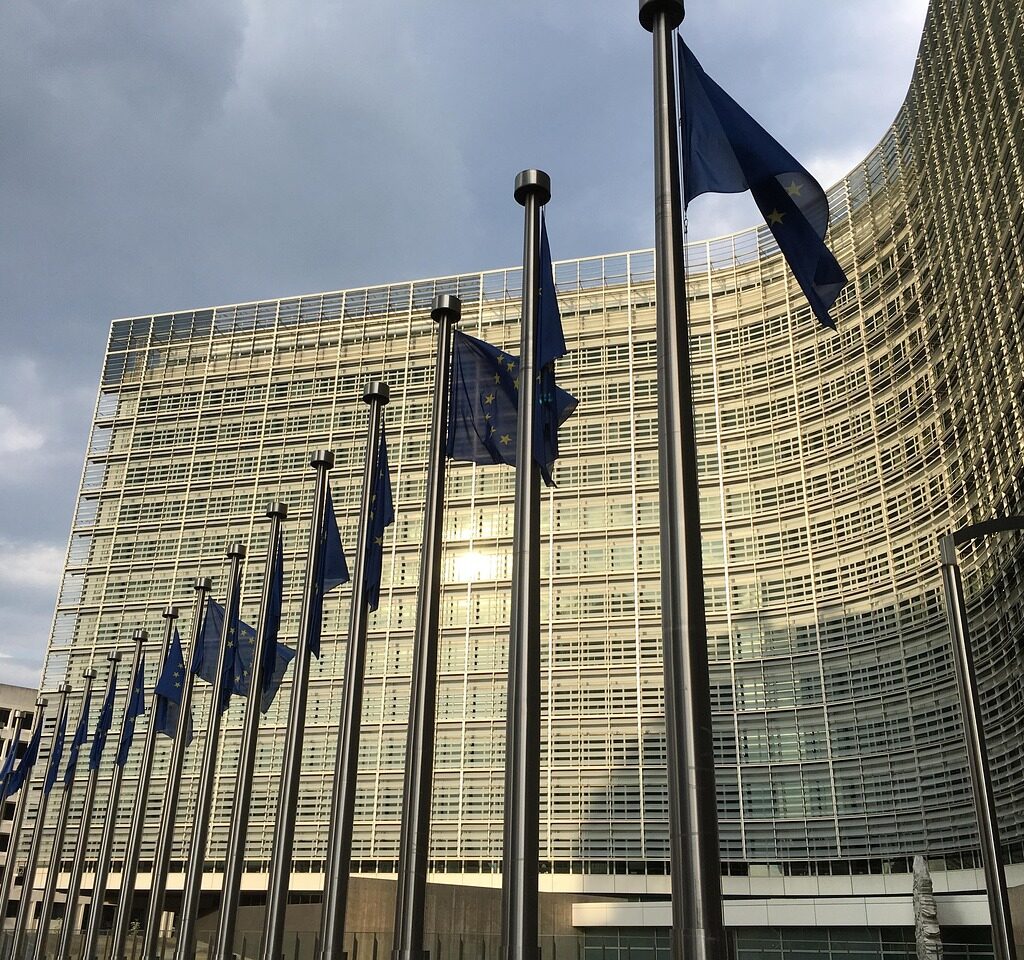
NGOs still remain influential in policy debate on EU spending
By Pieter Cleppe
The Danish Presidency has ignited a major political storm in Brussels after introducing a last-minute overhaul of the Tobacco Excise Directive (TED) that dramatically raises taxes on heated tobacco products. A newly circulated Council draft reveals that both the Presidency and the European Commission have embraced some of the most aggressive tax levels promoted by anti-tobacco NGOs—despite ongoing objections from several EU capitals.
The centrepiece of the controversy is a “super tax” that more than doubles the Commission’s original proposal, setting a €360/kg minimum rate and imposing a 55% retail-price floor, changes that critics say distort the excise framework and undermine harm-reduction strategies.
The move has sparked alarm among member states, whose repeated requests for clearer impact assessments, proportional increases, and safeguards against illicit trade appear to have been sidelined. Many diplomats privately warn that the new figures resemble NGO submissions far more than anything resembling Council consensus or scientific debate.
The European Court of Auditors just blew the whistle on Brussels between 2021 and 2023, the EU gave €7.4 billion to NGOs, many lobbying Brussels itself. Auditors say the funding trail is “fragmented and inaccessible.” Read more here: https://t.co/CFJwT4AA3i pic.twitter.com/ymXy34VffZ
— The European Conservative (@EuroConOfficial) October 21, 2025
Structural changes—such as rewriting definitions, tightening e-cigarette taxation, reclassifying waterpipe tobacco, and imposing steep future hikes on nicotine pouches—were also introduced with minimal consultation, reinforcing accusations that NGO advocacy is eclipsing national evidence and expertise.
Because tax directives require unanimity, the timing and scale of these amendments have raised transparency concerns as negotiations enter their final phase. Officials fear being cornered into a “take-it-or-leave-it” deal built on numbers never tested in Commission consultations but widely circulated by NGO networks. With several governments warning of risks to public-health outcomes, national revenues, and regional economic balance, the fight over the TED has become a broader question: who is truly steering EU health and tax policy—the elected governments of Europe, or the NGOs whose recommendations increasingly frame the Commission’s proposals?
Ever more intense negotiations
Discussions over the EU’s next long-term budget are reaching boiling point, and insiders warn the talks could become the most contentious in the Union’s history. One EU diplomat has already described the negotiations on the 2028–2034 Multiannual Financial Framework (MFF) as unprecedentedly difficult.
A major trigger for the tension was the European Commission’s July proposal to push EU spending to heights never seen before: nearly €2 trillion over seven years, a staggering jump from the current €1.2 trillion. That the European Court of Auditors issued its sixth consecutive adverse opinion on EU expenditure this autumn has done little to restrain the Commission’s appetite.
"As the EU Commission prepares to pitch its next long-term budget framework on Wednesday, one thing is noticeably absent: a serious plan to stop EU cash from being siphoned off by fraudsters" #eubudget #mff https://t.co/OJFW2OY2qS pic.twitter.com/owf6I4RVdz
— Pieter Cleppe (@pietercleppe) July 14, 2025
The evidence of persisting NGO influence is especially awkward given the ongoing NGO funding scandal. Investigations have revealed that the Commission channelled billions of euros to NGOs that were simultaneously instructed on how to influence EU policymaking. Although Commission officials insist that, under new 2024 guidelines, grant-related lobbying instructions will no longer occur, many MEPs remain unconvinced. Some, such as MEP Sander Smit, now demand that subsidy contracts be fully transparent. The fact that NGOs still wield significant sway—despite recent revelations—only strengthens concerns that taxpayer funds are being used to bankroll groups that claim to represent “civil society” but do not necessarily do so.
Own resources
Alongside the request for more spending, the Commission wants the power to raise significantly more “own resources”—in practical terms, EU-level taxes. These would hit large firms, tobacco and nicotine products, certain electronics waste streams, and emissions. Yet reactions among member states have been anything but enthusiastic.
The Commission’s flagship idea for a new corporate levy—known as the “Corporate Resource for Europe” (CORE)—exemplifies this disconnect. Intended to extract around €6.8 billion annually from businesses with turnover above €50 million and a permanent EU presence, it was met with total silence. Not one member state offered a supportive comment when the plan was presented. That unanimous skepticism underscores just how out of sync the Brussels bureaucracy can be with national governments.
The same chilly reception has greeted the “Tobacco Excise Duty Own Resource” (TEDOR). Sweden’s Finance Minister Elisabeth Svantesson blasted the proposal as “completely unacceptable,” noting that the Commission seeks not only to tax traditional tobacco but also reduced-risk alternatives such as white snus. Because Sweden has an EU-level exemption allowing snus sales, diverting the resulting revenue to Brussels rather than Stockholm is especially sensitive.
Det verkar som att EU-kommissionens förslag skulle innebära en väldigt stor skattehöjning på vitt snus och dessutom vill kommissionen att skatteintäkterna ska gå till EU och inte till Sverige.
— Elisabeth Svantesson (@ElisabethSvan) July 8, 2025
Sweden’s irritation is unsurprising. After decades of permitting snus—used widely as an alternative to smoking—the country boasts the lowest smoking rates in Europe and dramatically fewer smoking-related illnesses. Swedish tobacco-related deaths are 44% lower than the EU average, lung cancer rates 41% lower, and cancer deaths 38% lower. Yet Commission officials, including Wopke Hoekstra, the Commissioner overseeing the revision of the Tobacco Excise Tax Directive, continue to conflate smoking and vaping. At a European Parliament hearing, Hoekstra declared that “Smoking kills, vaping kills,” despite the UK health authorities estimating e-cigarettes to be 95% less harmful than combustible tobacco.
Resistance is brewing
Amid all this, a counter-movement is forming. A reinforced coalition of “frugal” member states is positioning itself to resist ever-expanding EU budgets. The traditional frugals—Austria, Sweden, Germany, the Netherlands, Finland and Ireland—have gained unexpected company. France and Belgium, both net contributors, are now signalling that enough is enough. Denmark is expected to join the group once its Council presidency ends in January.
This enlarged bloc is pressing for a scaled-back MFF. Austria’s Europe Minister Claudia Plakolm summed up the sentiment: if national governments must be prudent with public money, Brussels must show at least the same restraint. Sweden’s EU Affairs Minister Jessica Rosencrantz echoed the call, arguing that the EU must “put this budget on a diet” and refocus on core tasks.
Their efforts seem to be resonating. A recent draft EU Council position on the next long-term budget calls for strict “budgetary discipline” across EU institutions. Member states push back strongly against the Commission’s plan to raise administrative spending from €82 billion to €118 billion, insisting that simplification, the merging of programme streams, and the use of new technologies—including AI—should reduce bureaucracy, not increase it.
Whether this marks the end of Brussels’ long season of expansion remains to be seen. But the growing resistance among member states suggests that, at the very least, the days of unquestioned budget growth may finally be coming to an end.