
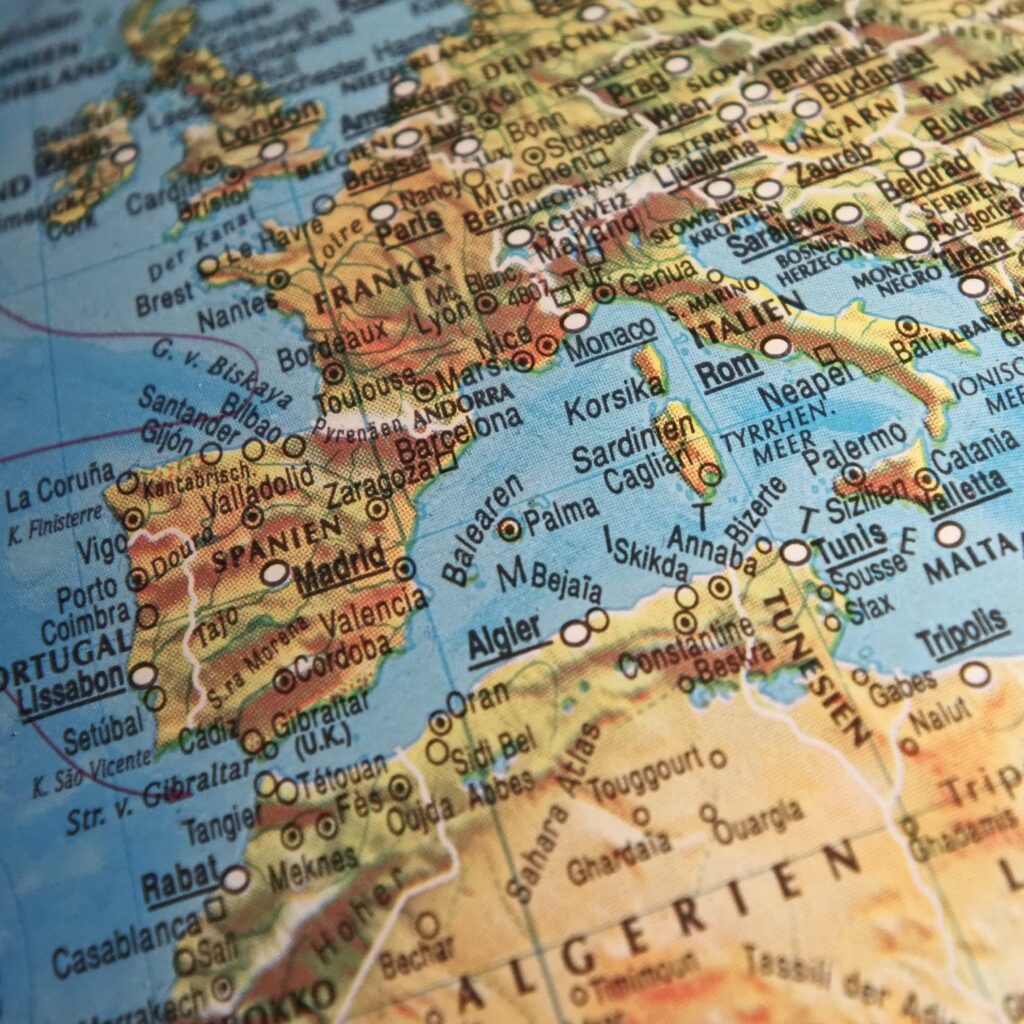
Algeria, Nigeria, and Niger are progressing the long-planned Trans-Saharan Gas Pipeline (TSGP), a roughly 4,200–4,300 km project intended to carry Nigerian (and potentially Nigerien) gas northward through Niger to Algeria for onward export to Europe and other markets. Recent developments include agreement on a financing framework, the start of construction on the Algerian section, and advanced but still unfinished talks with Russian companies on possible industrial participation.
The TSGP is designed for an initial capacity of about 20 billion cubic metres per year, expandable to around 30 bcm. Its route would link Nigerian gas production areas to Algeria’s Hassi R’Mel hub, from which gas could connect to existing export pipelines toward Europe. The project is led by the national companies of the three countries: Algeria’s Sonatrach and Nigeria’s NNPC together hold a combined 90% stake, with Niger’s Sonidep holding 10%. Total cost estimates centre around $13 billion. An updated feasibility study was approved in June 2026; Algeria subsequently began work on its domestic section near Aoulef in Adrar province. Algeria has also indicated readiness to finance the section crossing Niger.
In parallel, Algerian officials have reported advanced discussions on involving Russian companies. Foreign Minister Ahmed Attaf stated during talks with Russian Foreign Minister Sergey Lavrov in Moscow on 27 October 2026 (on the margins of the Russia-Africa Summit and GECF events) that negotiations were progressing well and that a contract was nearing finalisation. Hydrocarbons Minister Mohamed Arkab was cited as conveying that the talks were advancing and that an agreement would be concluded. Algerian media have identified the Russian pipe manufacturer TMK—subject to U.S. sanctions—as a potential participant, particularly for steel pipe supply. In June 2026, a TMK delegation held industrial discussions in Algeria with SNS Holding and steel groups ALSOLB and SIDER on pipe manufacturing and technology transfer; no TSGP-specific contract was announced from that meeting. As of mid-November 2026, no formal contract signing with a named Russian company has been publicly confirmed.
Algeria is Seeking Russian Support to Realise the Trans-Saharan Gas Pipeline (TSGP) and Increase Gas Supplies to Europe.
Moscow and Algiers are advancing energy ties that challenge Europe's gas diversification strategy.
Here are the key takeaways. 👇🇷🇺🇩🇿🇪🇺🧵 pic.twitter.com/08HWKPiCo2
— Francesco Sassi (@Frank_Stones) November 9, 2026
These pipeline discussions occurred alongside the 8th Gas Exporting Countries Forum (GECF) summit in Moscow in late October 2026. Algerian Prime Minister Sifi Ghrieb represented President Abdelmadjid Tebboune. In the speech delivered on Tebboune’s behalf, Algeria reaffirmed natural gas as a lasting economic pillar, stressed the need for a “just and progressive” energy transition in which gas serves as a partner to renewables, and emphasised national sovereignty over energy pathways and the right of countries to determine their own transition sequences. The summit adopted the Moscow Declaration, which reaffirmed members’ role as reliable suppliers and the contribution of gas to energy security.
Analysts, including energy geopolitics researcher Francesco Sassi, have examined the potential Russian industrial role in the context of broader Algeria–Russia energy cooperation and European efforts to diversify away from Russian gas supplies. Official statements from the three partner countries focus on the project’s contribution to regional energy connectivity, Algerian export capacity, and African gas development. Timelines for full operation are generally described as toward the end of the current decade, subject to remaining financing, construction, security, and commercial decisions. Capacity, length, and cost figures reflect company and government statements and contemporary reporting.