
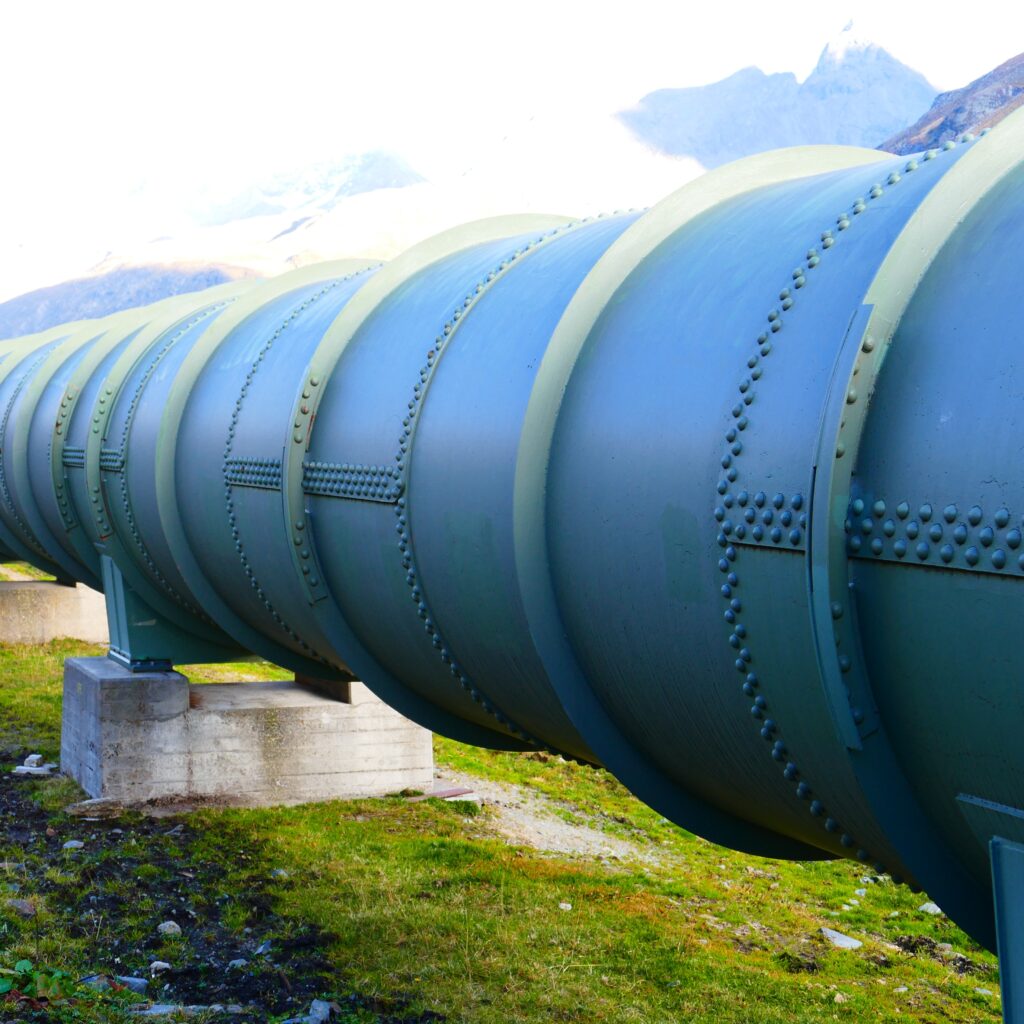
Qatar’s UCC Holding has started work on a 186-kilometre section of the Arab Gas Pipeline linking Homs and Aleppo in Syria. The project forms part of broader efforts involving Qatari capital, Turkish transit infrastructure, and Azerbaijani gas supplies to support electricity generation and regional gas connectivity in the post-2024 period.
Construction of the 36-inch pipeline segment began in late September 2026, attended by officials from the Syrian Petroleum Company. The line is designed for an initial transmission capacity of up to 11 million cubic metres of gas per day, with provision for potential future expansion to around 22 million cubic metres. Completion is targeted within approximately 22 months (around mid-to-late 2028). The segment completes a roughly 566-kilometre Syrian portion of the Arab Gas Pipeline running from the Jordanian border to the Turkish border and is equipped for bidirectional flow. It also includes a compressor station.
This expansion connects to an already operational northern link. Since August 2025, Azerbaijan’s SOCAR has been supplying gas from the Shah Deniz field in the Caspian Sea through Turkish territory (via the Kilis–Aleppo pipeline) into northern Syria. Initial volumes are planned at about 1.2 billion cubic metres per year (with some reports noting potential for higher early-phase deliveries), primarily to support power plants in Aleppo and Homs. The initiative has involved coordination among Azerbaijan, Türkiye, Syria, and Qatari development funding.
Qatar, Türkiye, and Azerbaijan are building a new gas pipeline, connecting the Caspian Sea to Syria
These countries are leveraging energy infrastructure to reshape post-Assad Syria and bypass Persian Gulf bottlenecks
Here are the key takeaways from my latest analysis
👇🇦🇿🇶🇦🇹🇷🇸🇾 pic.twitter.com/QIuiW462vY— Francesco Sassi (@Frank_Stones) October 13, 2026
Separately, in May 2025, Syria signed a memorandum of understanding valued at approximately $7 billion with a consortium led by UCC Holding (Qatar), alongside Turkish firms Kalyon and Cengiz and U.S.-linked Power International. The plan covers multiple gas-fired combined-cycle power plants (totaling around 4,000 MW) and solar installations (around 1,000 MW) across sites including the Aleppo, Deir Ezzor, Hama, and Homs areas. Project partners have stated that the facilities could ultimately meet more than half of Syria’s electricity needs once completed, subject to final agreements, financing, and construction timelines.
These developments occur against a backdrop of longstanding challenges to Syrian energy infrastructure from years of conflict, as well as broader regional pressures on traditional maritime energy routes through the Persian Gulf and Red Sea. Analysts, including energy geopolitics researcher Francesco Sassi, have described the pipeline work and related power investments as contributing to expanded overland gas networks linking the Caspian region through Türkiye into the Levant, with implications for Syrian reconstruction and regional energy flows. Assessments of longer-term geopolitical effects—such as shifts in transit options or influence among regional actors—differ and remain subject to project execution, security conditions, commercial terms, and further policy decisions.
Official statements from the companies and governments involved emphasize the projects’ role in rehabilitating Syria’s gas transmission capacity, supporting domestic electricity generation, and enhancing connectivity with neighbouring countries. Capacity and timeline figures are based on company announcements and contemporary reporting from sources including UCC Holding, Syrian Petroleum Company statements, Reuters, and regional energy outlets.