
An overview of the analysis by Francesco Sassi
The recently signed nuclear cooperation agreement between the United States and Saudi Arabia is being presented by both governments as a framework for expanding civilian nuclear cooperation. However, energy geopolitics analyst Francesco Sassi argues that its implications extend well beyond commercial energy development and could influence the strategic balance across the Middle East.
According to Sassi, the agreement should be viewed not only as an energy partnership but also as part of a broader geopolitical contest involving regional security, nuclear proliferation and competition among major powers.
A Long-Term Strategic Partnership
The agreement was signed by U.S. Energy Secretary Chris Wright and Saudi Energy Minister Prince Abdulaziz bin Salman. It establishes a framework, commonly referred to as a “123 Agreement,” governing peaceful nuclear cooperation between the two countries over the coming decades.
Sassi argues that the deal supports Washington’s wider objective of strengthening its position in the global civilian nuclear industry, where China and Russia have become increasingly active exporters of nuclear technology and infrastructure.
From this perspective, the agreement is as much about maintaining American influence in strategic industries as it is about supporting Saudi Arabia’s plans to diversify its energy sector.
Questions Over Nuclear Safeguards
One of the issues highlighted by Sassi concerns the safeguards attached to the agreement.
He notes that reports suggest the arrangement may not require Saudi Arabia to adopt the International Atomic Energy Agency’s (IAEA) Additional Protocol, an enhanced safeguards framework that allows more extensive inspections of nuclear facilities. If confirmed, he argues, this would represent a notable departure from the stricter conditions that Western governments have previously sought in negotiations with countries such as Iran.
Sassi suggests that this aspect of the agreement is likely to become one of the most closely scrutinised elements as lawmakers and non-proliferation experts examine the details.
Washington and Riyadh just signed a landmark 123 nuclear agreement.
While framed as commercial cooperation, the deal grants Saudi Arabia nuclear fuel cycle capabilities—reshaping Gulf energy geopolitics amid rising regional conflict.
Here’s what you need to know 🧵🇸🇦🇺🇸🇾🇪🇮🇷👇 pic.twitter.com/hLKBQTuQbQ
— Francesco Sassi (@Frank_Stones) July 23, 2026
Fuel Cycle Capabilities and Proliferation Concerns
Another point raised in Sassi’s analysis is the possibility that Saudi Arabia could eventually develop parts of the nuclear fuel cycle, including uranium enrichment and spent-fuel reprocessing.
While such technologies have legitimate civilian applications, they are also considered sensitive because they can, under certain circumstances, contribute to the technical capability required to produce nuclear weapons.
Sassi argues that these concerns cannot be separated from the broader regional context. He recalls Saudi Crown Prince Mohammed bin Salman’s previous statement that the Kingdom would seek comparable capabilities if Iran were ever to acquire nuclear weapons, viewing this as an indication that regional strategic competition continues to shape nuclear policy.
Regional Security Implications
According to Sassi, the agreement arrives during a period of heightened instability across the Middle East.
Recent military confrontations involving Iran, continued tensions surrounding its nuclear programme and broader regional rivalries all contribute to a more complex security environment than existed when earlier discussions about Saudi nuclear cooperation first emerged.
In his view, introducing additional nuclear infrastructure into this environment inevitably raises new strategic questions, regardless of the programme’s stated civilian purpose.
Political Debate Beyond Saudi Arabia
Sassi also points to the political reaction in Israel.
Former Israeli Prime Minister Naftali Bennett has criticised the agreement, describing it as a strategic mistake and expressing concern about its implications for Israel’s long-term security.
According to Sassi, the agreement is likely to face significant scrutiny in the United States as well. Because congressional review forms part of the approval process for such agreements, he expects lobbying efforts by supporters and critics alike before the arrangement can move forward.
Infrastructure Security
Beyond questions of proliferation, Sassi highlights another issue that has received less attention: the physical security of future nuclear facilities.
He notes that Saudi energy infrastructure has previously been targeted by regional armed groups, including Houthi forces operating from Yemen. Continued attacks on energy assets and shipping in the Red Sea demonstrate, in his assessment, that critical infrastructure remains exposed to evolving security threats.
Should Saudi Arabia expand its civilian nuclear programme, Sassi argues, protecting both operational and under-construction facilities would become an increasingly important strategic consideration.
More Than an Energy Agreement
Overall, Sassi views the U.S.–Saudi nuclear agreement as a development whose significance extends beyond the energy sector.
In his analysis, the deal reflects several overlapping trends: intensifying geopolitical competition between major powers, shifting security dynamics in the Gulf, renewed debate over nuclear non-proliferation, and the growing strategic importance of civilian nuclear technology.
Whether the agreement ultimately strengthens regional stability or introduces new strategic risks will depend on its final implementation, the safeguards that accompany it, and the reactions of regional governments and international institutions in the years ahead.
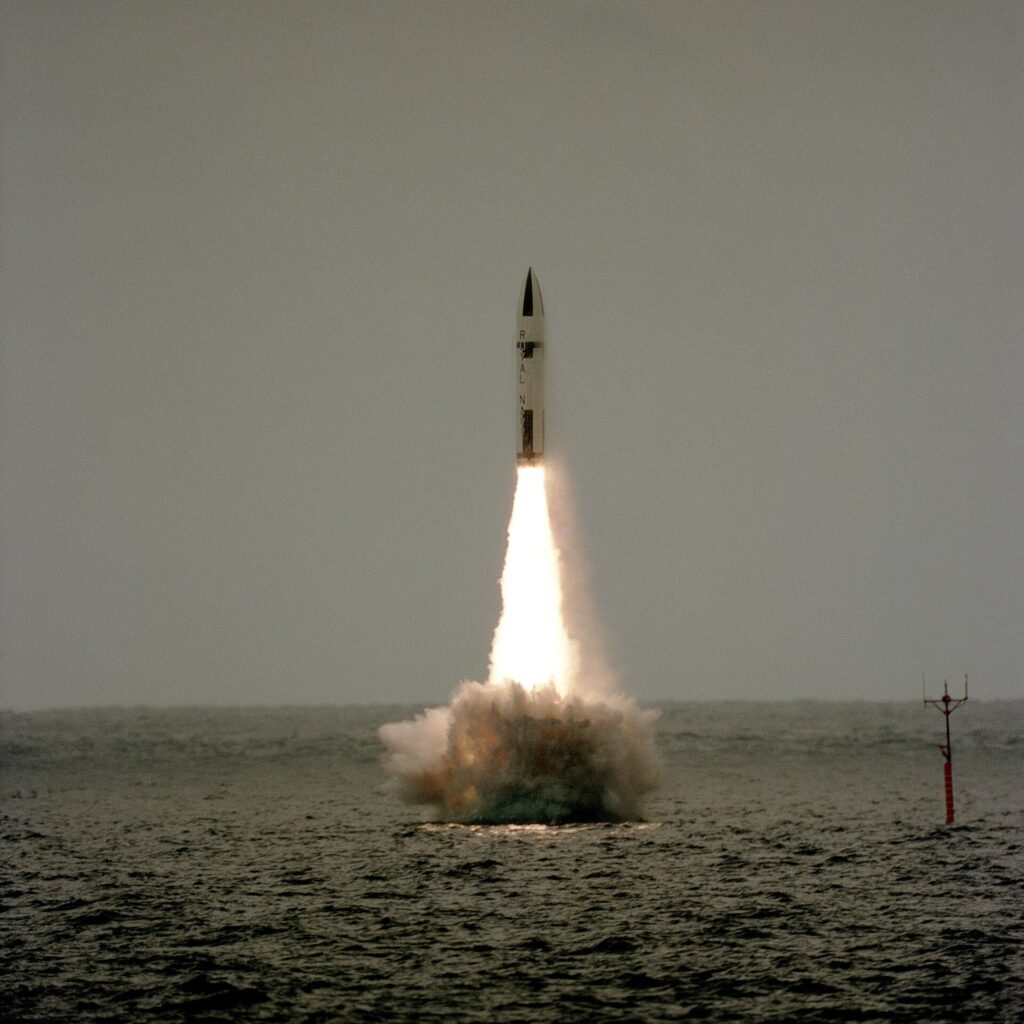
Picture: A Polaris missile lifts off after being fired from the submerged British nuclear-powered ballistic missile submarine HMS Revenge (S27) off the coast of Florida (USA) near Cape Canaveral Air Force Station. This was the 10th in a series of Polaris test flights. (Copyright: USN, Public domain, via Wikimedia Commons)