
By Pieter Cleppe
Europe’s energy strategy is no longer sustainable. What once passed as long-term planning has collided with geopolitical reality, and the consequences are now impossible to ignore. The war in Iran has merely accelerated a crisis that was already years in the making: a system built on fragile assumptions, increasing dependency, and political contradictions.
At the heart of the problem lies a fundamental mismatch between ambition and execution. European policymakers aimed to reduce reliance on fossil fuels—but instead of prioritizing energy independence, they curtailed domestic production while continuing to depend on imports. This created a structural vulnerability that is now being exposed.
Dependency by Design
Rather than phasing out fossil fuel consumption in a gradual and strategic way, Europe effectively outsourced its energy needs. Domestic production declined, while reliance on external suppliers—such as Russia and Qatar—grew. Ironically, Europe often imports fuels produced under less stringent environmental standards than those imposed internally.
This contradiction is now becoming politically untenable. The idea that reducing domestic production would strengthen resilience has proven flawed. Instead, it has weakened Europe’s position.
Even countries that once led the charge in shutting down production are reconsidering. The Netherlands, for example, went as far as sealing gas wells in Groningen with concrete to prevent future extraction. Now, voices like David Smeulders argue that maintaining these reserves as a strategic backup would have been far more sensible.
A Sudden Change in Tone
Across Europe, political leaders are beginning to reverse course—sometimes reluctantly.
Germany provides a striking example. Its Energy Minister, Katherina Reiche, has openly suggested that the country should begin exploiting its own gas reserves in the North Sea—something that would have been politically unthinkable just a few years ago.
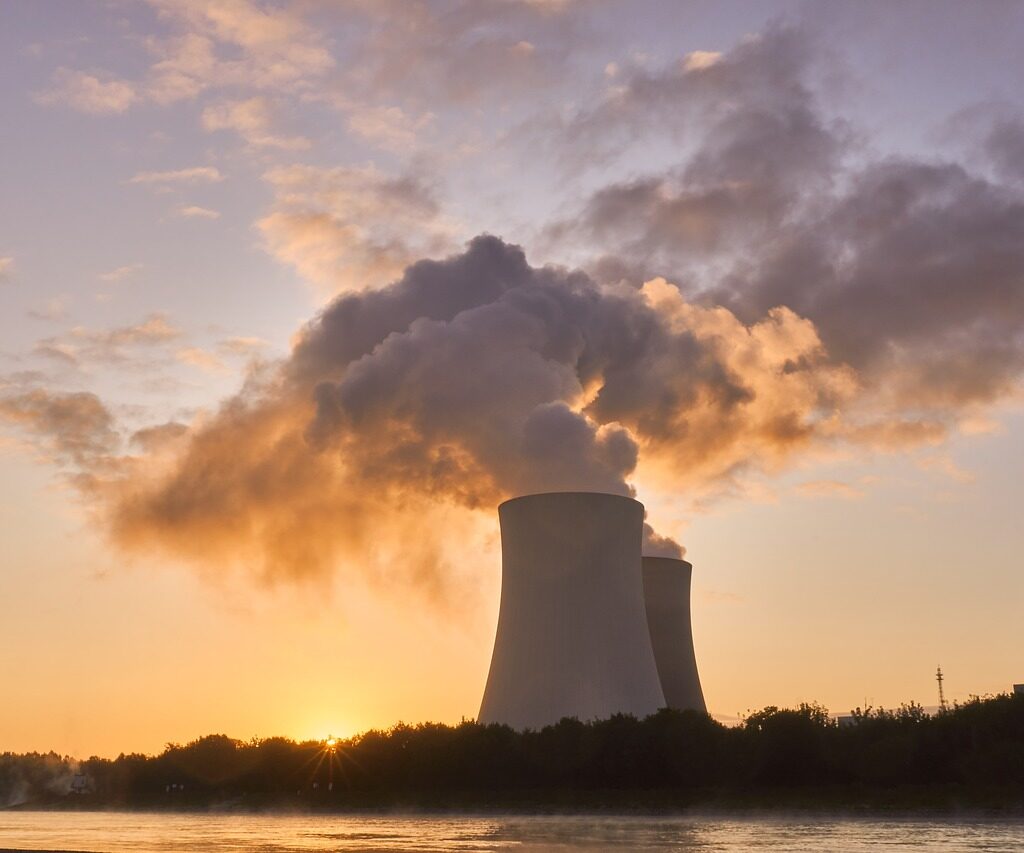
Even more notable is the shift from Ursula von der Leyen. She has acknowledged that Europe’s move away from nuclear energy was a “strategic mistake,” pointing out that nuclear once provided a third of Europe’s electricity but now accounts for only about 15%.
Such admissions are rare in politics—especially given that she herself supported Germany’s nuclear phase-out while serving in the Bundestag.
The ETS Dilemma
Despite these shifts, some core policies remain firmly in place—most notably the EU’s Emissions Trading System (ETS). While intended to reduce emissions, the system has effectively functioned as a heavy cost burden on European industry.
The paradox is clear: energy has been made artificially expensive through policy, and the resulting drop in consumption is then presented as a success. Critics argue that this logic is fundamentally flawed.
Industrial players are pushing back. Companies like BASF have warned about the impact on competitiveness, while several EU member states—including Italy, Poland, and Slovakia—are calling for a suspension of the ETS to provide immediate relief.
Still, Ursula von der Leyen defends the system, arguing that without it, gas consumption would be significantly higher. Similarly, Dutch politician Rob Jetten has claimed that climate policies have reduced costly fossil fuel imports.
Yet this reasoning sidesteps the central issue: high costs are not the same as efficiency.
Expanding EU Control
The European Commission, in a clear attempt to divert attention from the ETS issue, is pushing for EU Member States to reduce energy taxes in order to lower energy bills.
Although this is clearly a good idea, it is not the role of the European Commission, which seizes virtually every opportunity to gain more control over national tax policy. Last summer it put forward a proposal for more “own resources” – direct levies to finance the EU budget, alongside national contributions.
A number of EU Member States are strongly opposed to this. In response, the Swedish Minister for Finance, Elisabeth Svantesson, described it as “utterly unacceptable”, whilst also lamenting that the Commission regards not only levies on tobacco products as one of these “own resources”, but also levies on tobacco alternatives. She complained: “It appears that the European Commission’s proposal would mean a very large tax increase on white snus, and moreover, the Commission wants the tax revenue to go to the EU and not to Sweden.”
That is indeed problematic. Sweden is the only EU Member State with an exemption from the EU ban on snus, an alternative to smoking tobacco. After three decades, the alternative Swedish approach can be assessed. The country has not only one of the lowest smoking rates in Europe, it also has a much lower incidence of smoking-related diseases.
Separately, the European Commission is pushing for higher minimum excise duties on traditional tobacco products through the revision of the Tobacco Products Directive. Complaints that this would fuel the illegal tobacco trade and harm consumers’ purchasing power, particularly in poorer EU Member States, are being ignored. In a parliamentary question, Swedish MEP Jessica Polfjärd warned that this EU legislative change “must not undermine the successful” Swedish model, emphasising that the Swedish exemption must also continue to apply to ‘white snus’ – nicotine pouches – which are emerging as an alternative product and contain no tobacco at all.
In January, the Cypriot Presidency of the Council of the EU put forward a new draft compromise on this issue that represents an improvement, as it somewhat softens the increase in certain areas and also grants a transition period. This is further evidence that the EU Member States are the more reasonable party here, even though the approach of treating non-harmful or less harmful products in the same way as harmful products has been maintained for the time being. Cyprus is supported by several EU Member States, which fear that too abrupt an increase could fuel the black market, erode tax revenues and overburden national enforcement agencies.
Price Controls and Policy Contradictions
In response to rising energy costs, the European Commission has also floated the idea of gas price caps and subsidies. However, such measures address symptoms rather than causes.
Price controls cannot resolve supply shortages—and may even worsen them. The deeper issue remains Europe’s reduced capacity to produce its own energy.
This contradiction is especially striking given that the same institutions advocating price intervention have supported policies limiting fossil fuel production in the first place.
A Broader Shift in Debate
Beyond the EU, similar debates are unfolding. In the United Kingdom, decisions to halt new North Sea oil and gas projects are increasingly being questioned. Analysts like Javier Blas argue that domestic production is not only economically beneficial but also environmentally preferable to imports.
There is also renewed interest in shale gas. Although extraction remains banned in much of Europe, countries continue to import expensive liquefied natural gas—including shale gas from the United States.
According to Matt Ridley, the UK could have been close to energy self-sufficiency had it pursued shale development earlier. Instead, it now faces higher costs and continued dependence.
Adding a geopolitical dimension, former NATO Secretary-General Anders Fogh Rasmussen once suggested that anti-shale campaigns in Europe may have been influenced by Russian interests—an allegation that underscores the strategic stakes involved.
An Unavoidable Turning Point
It remains uncertain how the situation in Iran will evolve, but one conclusion is already clear: Europe can no longer continue with “business as usual” in energy policy.
The long-standing resistance to domestic fossil fuel production is becoming increasingly costly—economically, politically, and strategically. As the crisis deepens, more policymakers are being forced to confront a reality that was previously ignored: energy independence cannot be achieved through dependency.
The debate is changing. The question is no longer whether Europe’s energy policy must adapt—but how quickly it can do so.