
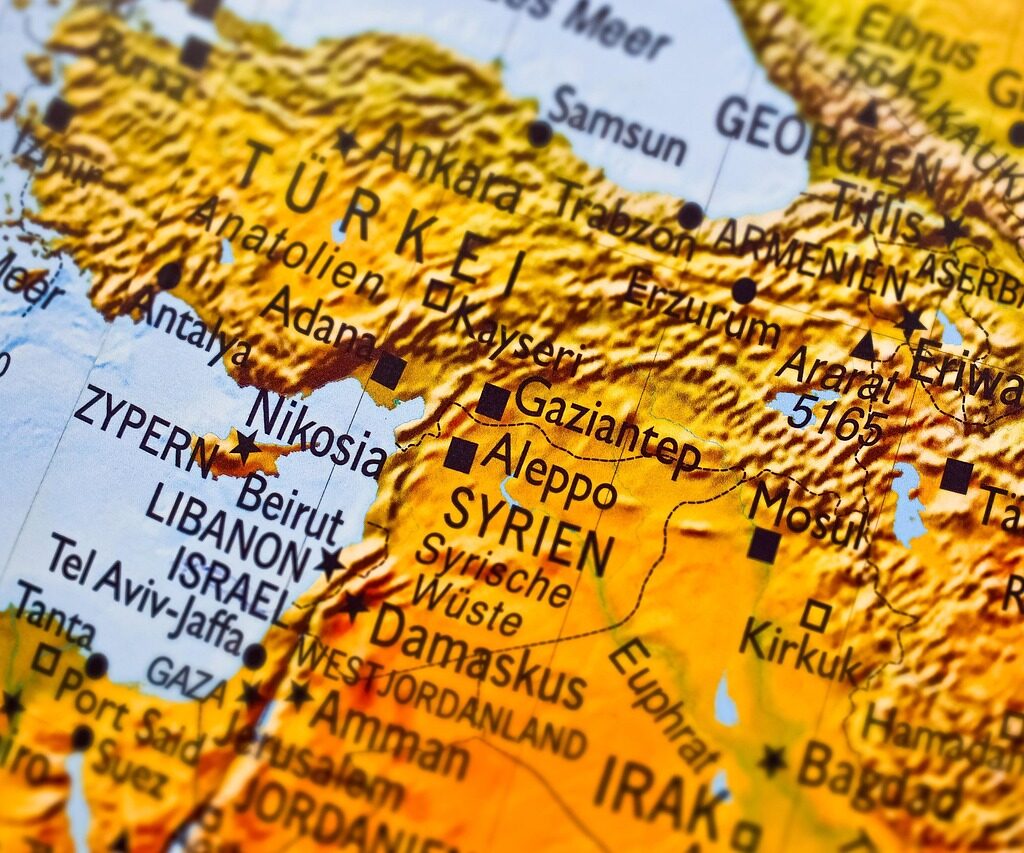
Turkey has multiple reasons to be wary of the escalating conflict in Iran: the potential refugee crisis, disruptions to oil and gas supplies, impacts on trade, and losses in tourism. Above all, Ankara prefers to stay out of the fighting and maintain a role as a neutral mediator.
Turkish President Recep Tayyip Erdoğan made this clear on Monday following a cabinet meeting. “Our foremost priority,” he said, “is to keep our country out of the flames of a war with Iran.” This statement reflects a strategy the Turkish government has been quietly pursuing for nearly two weeks—and for good reason. Turkey shares a long border with Iran, and any military escalation could affect the country in numerous ways. On top of that, Turkey hosts a key American military base: Incirlik Air Base in the south, which has played critical roles in the 2003 Iraq War, the fight against IS, and U.S. operations in Afghanistan.
Last Wednesday, an American destroyer intercepted an Iranian missile over Syria that was reportedly heading toward Turkey. According to U.S. media reports, the missile was intended for Incirlik. Yet both Ankara and Washington seemed intent on avoiding escalation. Turkey refrained from invoking NATO’s Article 5, which could have called for collective defense.
Iranian Missile Threat on Turkish Soil
The threat resurfaced on Monday when NATO air defenses in the Eastern Mediterranean intercepted another Iranian ballistic missile over southern Turkey’s Gaziantep province. Debris fell harmlessly in open fields. In response, Erdoğan warned Iran against “taking further provocative steps” and later spoke directly with Iranian President Masoud Pezeshkian, reiterating the warning while emphasizing Turkey’s willingness to keep diplomatic channels open.
This position is precisely where Erdoğan wants Turkey to be: in the role of neutral mediator. Last month, Turkey even offered Istanbul as a venue for U.S.-Iran negotiations, although the talks ultimately took place in Oman.
Taking Defensive Measures
Despite Erdoğan’s efforts, Turkey is increasingly affected by the conflict and must act accordingly. On Monday, the government announced the deployment of six F-16 fighter jets to Northern Cyprus, the Turkish-controlled portion of the island. The following day, the Ministry of Defense stated that Turkish airspace would soon be monitored with an additional Patriot missile system in Malatya province, home to a key NATO base used to detect missile attacks.
Concerns Over Refugees and Regional Stability
One of Turkey’s primary concerns is the potential refugee influx from Iran, a country of roughly 93 million people. Turkey already hosts about 3.5 million Syrians and hundreds of thousands of other refugees; accommodating a large number of Iranians would place additional strain on its resources.
Ankara also fears that Iranian-Kurdish militias operating from Iraq could take up arms against the Iranian regime, potentially bolstering Kurdish separatist movements across the region, including within Turkey. This comes at a delicate moment, as Ankara is engaged in a peace process with the Turkish-Kurdish PKK; any renewed separatist momentum sparked by the conflict could undermine those efforts.
Energy security is another critical concern. Turkey relies heavily on imports for oil and gas, with significant volumes coming from Iran, Central Asia, and the Gulf region. Many of these supplies pass through Turkish pipelines, which also serve as transit routes to Europe. As Turkey aspires to become an energy hub, disruptions could have widespread economic consequences. Rising global prices for oil and gas only heighten Ankara’s vulnerability.
Trade and tourism are further at risk. Iran is a key trading partner, and any regional instability could disrupt Turkey’s broader commerce with Central Asia. Tourism, a major source of revenue, may also be affected if the conflict escalates.
Balancing Relations with the U.S.
While the Turkish government has condemned military strikes on Iran by Israel and the United States, it has done so carefully, mindful of tone and alliances. Relations with Israel remain strained, but Ankara continues to cultivate ties with the U.S. President Erdoğan has emphasized maintaining a working relationship with then-U.S. President Donald Trump, while Foreign Minister Hakan Fidan has been active on multiple diplomatic fronts, advocating for de-escalation and mediation.
Turkey’s relatively low exposure compared to Gulf states is notable. While it shares a border with Iran and hosts U.S. military facilities, it has avoided the brunt of Iran’s ire—likely due to its NATO membership, strong military capabilities, and the fact that it represents a formidable regional power. Turkey has a substantial defense industry and, in terms of manpower, maintains NATO’s second-largest army, positioning it as a significant deterrent.
Conclusion
For Erdoğan and his government, the priority is clear: maintain Turkey’s strategic autonomy, keep the country out of the crossfire, and assert a role as a mediator. With the potential for a refugee crisis, energy disruptions, and regional instability, the stakes could not be higher. Turkey’s careful balancing act—between diplomacy, military readiness, and regional influence—will define its approach to the unfolding Iran conflict in the months ahead.